Dia Alhamwi
Dia Alhamwi was born in Aleppo, Syria, in 1963. His upbringing was deeply influenced by his father's involvement in Sufism, music, art, and dance. From a young age, Alhamwi was captivated by Arabic calligraphy and the broader world of Middle Eastern art.
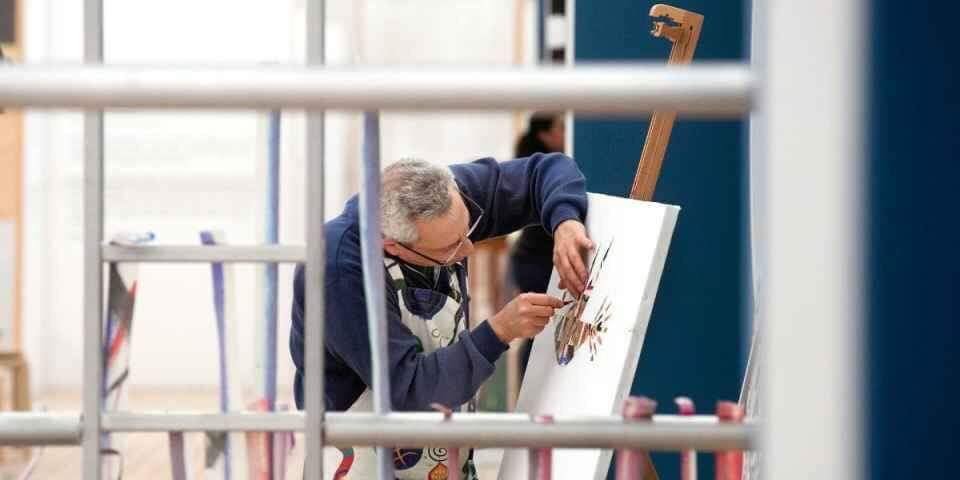
Dia Alhamwi at work
As he matured, he drew inspiration from global artistic movements and the rhythmic complexities of oriental music, often encouraged by his close circle of musician friends. Throughout his career, Alhamwi has sought a unique artistic language that remains rooted in his Syrian heritage while embracing international influences.
The cadence and rhythm of music are palpable in his canvases, where brushstrokes mirror melodic structures. He has tried to find his own expression in his art, with its foundation in Syria, but also with inspiration and impressions from other artists around the world.
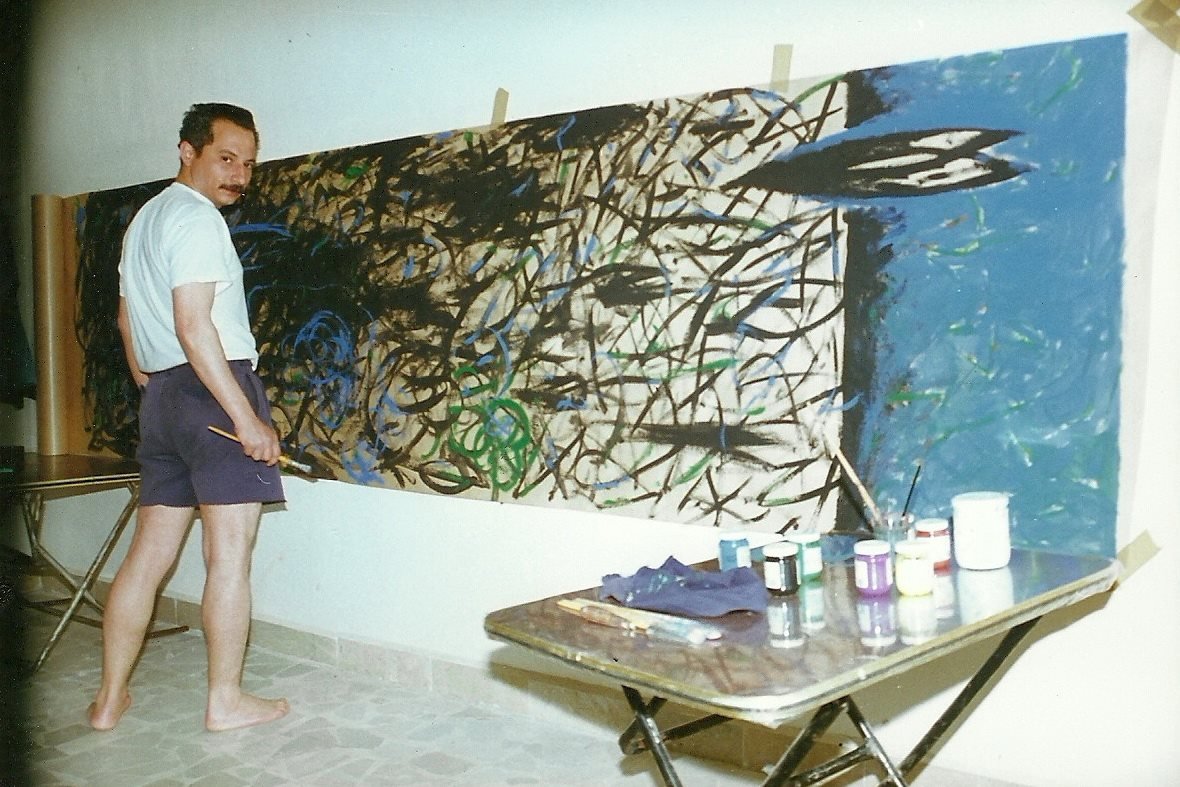
Alhamwi believes that artists are called to beautify the world as a counter-narrative to destruction. He views his work as a mission to provide hope and life, advocating for peace as the only true victory over conflict. "We cannot defeat war by waging war," he says, "but we can overcome it through the power of peace."
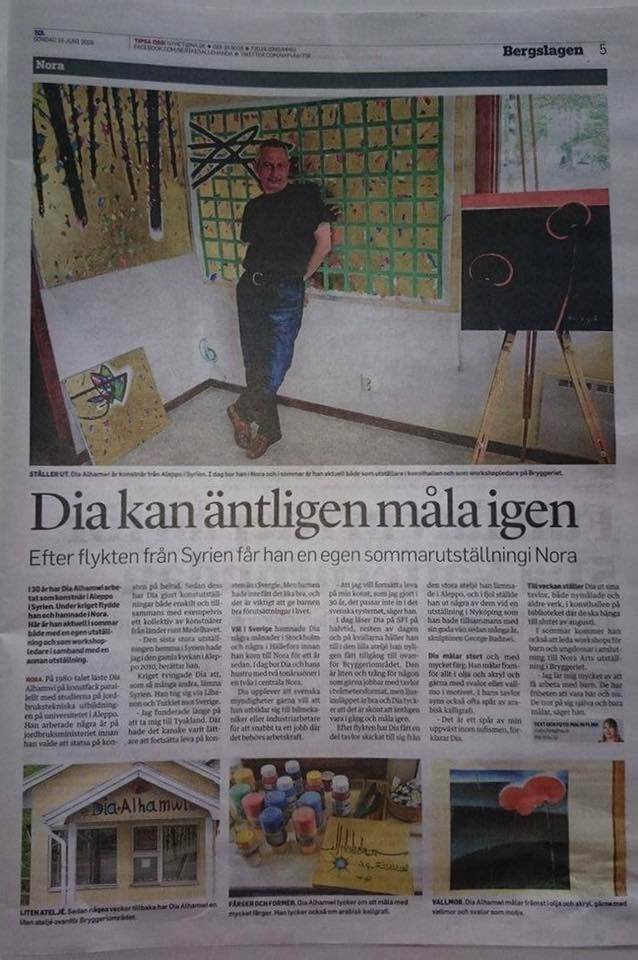
Featured in the press
In 2013, Alhamwi relocated to Nora, Sweden, due to the conflict in his homeland. Today, he continues his artistic practice from his studio in Sweden, working primarily with acrylics and oils. His goal remains steadfast: to contribute to a better world by spreading joy and hope through his creations.
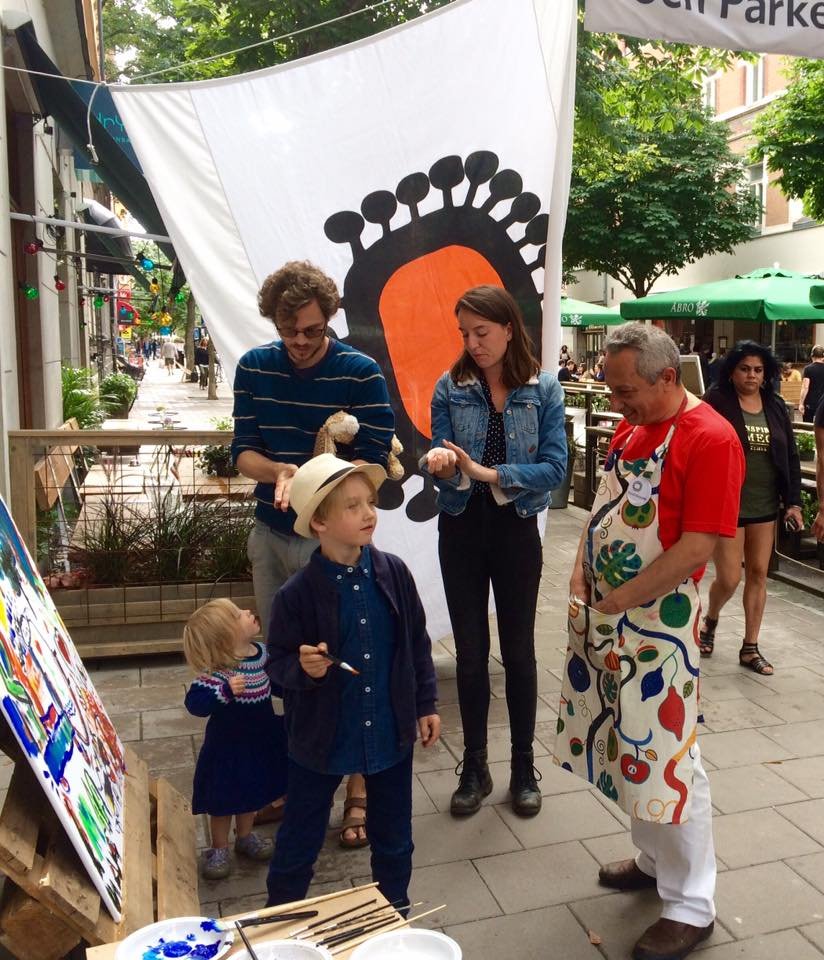
"Dare to Draw with Me" — Workshop, Stockholm, 2017
His work has been showcased in numerous exhibitions across France, Germany, Lebanon, Sweden, Saudi Arabia, Spain, the United Kingdom, and Syria.
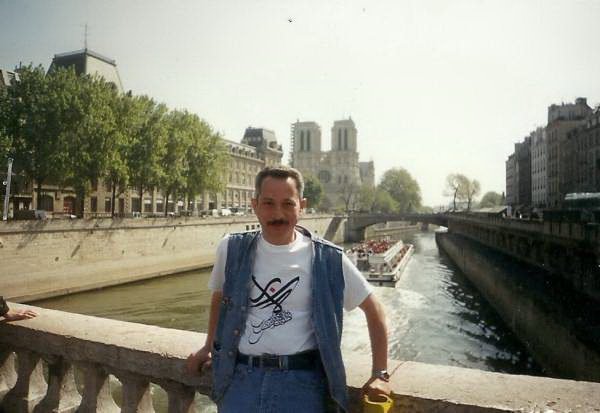
Paris Residency
Alhamwi was nominated by the Mansourieh Foundation for Culture and Creativity to participate in the organization's studio residency at the International City of the Arts in Paris during April and May. The decision to nominate him was made after the foundation's directors viewed his works, particularly a mural titled "The Biography of the Lost Bird."